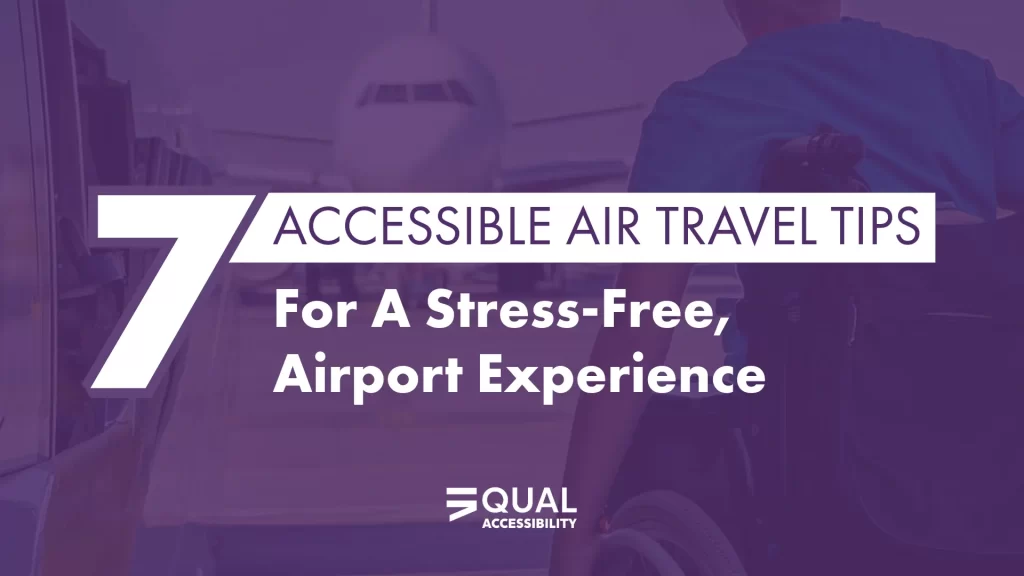
Traveling with a disability doesn’t have to feel like preparing for battle. But let’s be honest—it often does. From unpredictable airline policies to bathrooms that feel like broom closets, flying while disabled can be exhausting. The good news? A little preparation and the right tools can turn the chaos into something manageable—even enjoyable.
I’ve flown more times than I can count, and I’ve learned a lot the hard way. These accessible air travel tips come straight from real-life experience—like the time my wheelchair came back with the footplate bent beyond use… or the other time the joystick was so damaged I couldn’t move. Scratches, dents, and broken components have become way too common. My wheelchair has been made inoperable more than once.
Still, I fly. And I encourage others to fly too. This isn’t about scaring people off planes—it’s about demanding better from airlines, and sharing practical accessible air travel tips to make your next trip less stressful.
1. Call the Airline’s Accessibility Desk in Advance
Booking a flight is just the first step. Most airlines have a dedicated accessibility department (though they don’t always make it easy to find). As soon as your ticket is confirmed, call them directly and clearly explain your access needs.
Whether you travel with a power wheelchair, need early boarding, or have limited upper body movement, flag those things early. You can also confirm important details—like whether the plane has an accessible lavatory or if your chair can be stored upright in the cabin.
Pro Tip: Ask for the agent’s name and get a confirmation number for your accommodation request. It’s one of those accessible air travel tips that could save you from headaches at the gate.
2. Know Your Rights Under the Air Carrier Access Act (ACAA)
The ACAA protects travelers with disabilities from discrimination. It gives you the right to request assistance, travel with your mobility devices, and receive accommodations at all stages of your journey.
If you feel like you’re not being treated fairly or something important is being denied, ask for a Complaints Resolution Official (CRO). Every airline is legally required to have one available—on-site or by phone.
Want backup? The DOT recently published the Airline Passengers with Disabilities Bill of Rights. Keep a copy on your phone or print it out to bring with you.
3. Use the TSA Cares Program
This is one of my favorite accessible air travel tips, especially if you travel with medical devices, prosthetics, or mobility aids. TSA Cares allows you to call in advance and request extra support during security screening.
With a quick phone call, a TSA agent can meet you at the checkpoint and help guide you through the process. This makes a huge difference—especially when you can’t easily remove shoes, lift bags, or step through scanners.
Call at least 72 hours in advance at 1-855-787-2227 or submit a request online through the TSA website.
4. Pack a “Go Bag” With Your Essentials
If your mobility device has to be gate-checked or stored in cargo, don’t send it off without first pulling out your essentials. I never fly without a go-bag that includes:
- A charger or battery backup
- My seat cushion (if detachable)
- Any adaptive or medical equipment I may need
- Printed instructions for handling my wheelchair
- And yes—duct tape. Just in case.
After years of dealing with damaged chairs, I’ve learned to be prepared. One of the most overlooked accessible air travel tips is having a backup plan for when things don’t go as expected.
5. Board Early—But Not Too Early
Pre-boarding is helpful when you need more time or assistance getting to your seat. But boarding too early can leave you sitting in a hot, cramped plane longer than anyone else.
I always check in with the gate agent as early as possible and explain that I need assistance, but I’d prefer to board toward the end of the pre-board group. That way I still get help, but I’m not stuck waiting an extra 30 minutes before takeoff.
Again, this is one of those accessible air travel tips you only figure out after a few sweaty summers on the tarmac.
6. Document Your Equipment Before the Flight
If you use a wheelchair, walker, or scooter—take clear photos of it from all angles before you hand it off. I’ve had my wheelchair scratched, cracked, and in some cases returned completely unusable. A few times, I couldn’t even drive it away from the gate.
Label your chair with instructions like “Do Not Lift From Armrests” or “Store Upright Only.” Print out handling guides and tape them to the seat. It might feel excessive, but it’s a smart step in protecting your independence.
If something does happen, report it before you leave the airport. Ask for a Property Irregularity Report and take more photos of the damage. Don’t settle for a quick fix if it compromises your mobility.
7. Stay Calm, Speak Up, and Take Names
Things won’t always go perfectly. There have been times when the aisle chair never showed up, when my seat wasn’t accessible, or when staff just didn’t take the time to listen.
You’re allowed to speak up. Keep your cool, but don’t be afraid to ask for a supervisor or file a formal complaint. Write down names, document the situation, and remember that your experience matters.
Some of the most effective accessible air travel tips aren’t about packing or prepping—they’re about self-advocacy.
Bonus Tip: Keep a Running List of Airline Experiences
Every time I fly, I note how the airline handled accommodations, how accessible the lavatory was, and whether my mobility device was returned intact. Over time, I’ve built a shortlist of airlines and airports I trust—and the ones I avoid when I have a choice.
This is one of the most reliable accessible air travel tips I can offer: Know your patterns, trust your instincts, and build your own playbook.
Flying with a disability takes patience, but it also takes courage. The world wasn’t built with us in mind—but that doesn’t mean we should stay home. These accessible air travel tips are here to help you feel more prepared and more empowered to take on the skies.
And if you’re a travel company or airport looking to do better, contact Equal Accessibility. We help businesses build inclusive, people-first experiences for all travelers.
Did I forget one? Do you have some accessible air travel tips? Please email us and let me know!