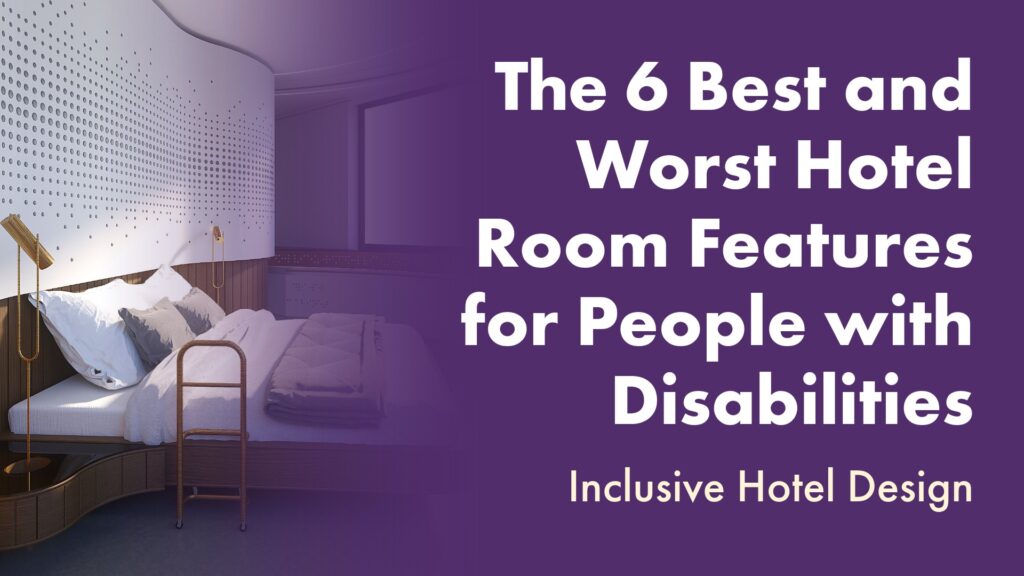
Inclusive hotel design goes far beyond ADA compliance. It’s about creating a travel experience that’s welcoming, comfortable, and functional for people with all kinds of disabilities. For many travelers, an accessible hotel room can make or break a trip. Unfortunately, even rooms labeled “accessible” often fall short in real-world use.
Here’s a look at the best and worst features we’ve encountered in hotel rooms—and how hotels can step up to create more inclusive environments for every guest.
The Best Features in Inclusive Hotel Design
1. Roll-in Showers with Proper Drainage
When done right, roll-in showers are a game changer. A curbless design makes transferring safer and easier, and handheld showerheads with long hoses give more control. Bonus points when the water stays in the shower area (yes, we’re looking at you, hotels with floods-for-floors).
2. Accessible Doors
Too many hotel rooms create unnecessary barriers at the door. The most inclusive hotel design includes automatic door openers—not just for the main room door, but also for bathrooms or connecting spaces. If automatic doors aren’t available, doors should at least be free of heavy closers or spring hinges. We also recommend hotel doors feature the Door Nub®—a simple but powerful tool that allows people with limited mobility to close doors without using a handle. Accessible doors make a big difference in privacy, safety, and independence.
3. Ample Floor Space for Wheelchairs
Inclusive hotel design prioritizes space for maneuvering. Wide paths between beds and furniture, turning clearance in bathrooms, and space under desks or sinks allow guests who use wheelchairs to move freely and independently.
4. Adjustable Bed Heights
Beds that are too high (or too low) create serious barriers. The best inclusive hotel rooms consider transfer height and provide beds that are adjustable or at least a reasonable, accessible height.
5. Visual and Tactile Accessibility
Features like flashing light alarms, braille room signage, and tactile elevator buttons support blind and Deaf travelers. These are often overlooked, but essential to true inclusive hotel design.
6. Accessible Power Outlets and Controls
Power outlets, thermostats, and light switches should be at reachable heights and not hidden behind furniture. Simple, consistent control panels (especially for lights and drapes) are helpful for all guests, especially those with mobility or cognitive disabilities.
The Worst Features That Undermine Inclusive Hotel Design
1. Bathtubs Marketed as “Accessible”
Let’s be clear: a bathtub with a plastic seat on the edge is not accessible. Many travelers who need an accessible room can’t safely step over a tub lip, even with grab bars.
2. Beds That Are Way Too Tall
Luxury mattresses and box springs may feel plush, but 30+ inch bed heights can be impossible for someone transferring from a wheelchair. Some hotels even place adjustable beds on platforms, completely defeating the purpose.
3. Heavy Doors Without Auto-Open
Bathroom doors that swing closed (or are too heavy to manage) can trap people inside, literally. Accessible hotel rooms should include auto-open features or doors that stay open when needed—especially in bathrooms.
4. Sink Basins With No Knee Clearance
A floating vanity is key for wheelchair users, yet some “accessible” sinks block access entirely with pipes, panels, or storage underneath. Inclusive hotel design requires thought below the surface too.
5. Inaccessible Balcony or Patio Doors
Outdoor spaces are great, but not if there’s a 3-inch lip that makes them unreachable. True inclusive hotel design ensures exterior access points are usable by everyone.
6. Inconsistent Booking Labels
“ADA accessible” can mean wildly different things depending on the hotel. Booking platforms and hotels need to clearly list room features with photos, measurements, and details—not just vague labels.
What True Inclusive Hotel Design Looks Like
Inclusive hotel design means thinking about the real-world needs of disabled guests from the moment they book to the moment they check out. It’s not just about ticking a legal box—it’s about respect, comfort, and autonomy. When hotels get this right, they welcome a wider range of travelers, reduce risk, and earn lifelong loyalty.
Inclusive hotel design should never be an afterthought. It should be embedded into the planning, renovation, and training of staff across the entire hotel experience—from front desk to housekeeping to facilities.
Want to Make Your Hotel More Accessible?
If you’re ready to go beyond ADA checklists and create a hotel experience that truly serves all your guests, we’re here to help. Equal Accessibility works with hospitality brands to evaluate, improve, and redesign their spaces using real-world experience and inclusive design principles.
Contact us today to learn how we can help elevate your hotel’s accessibility from “compliant” to “welcoming.”