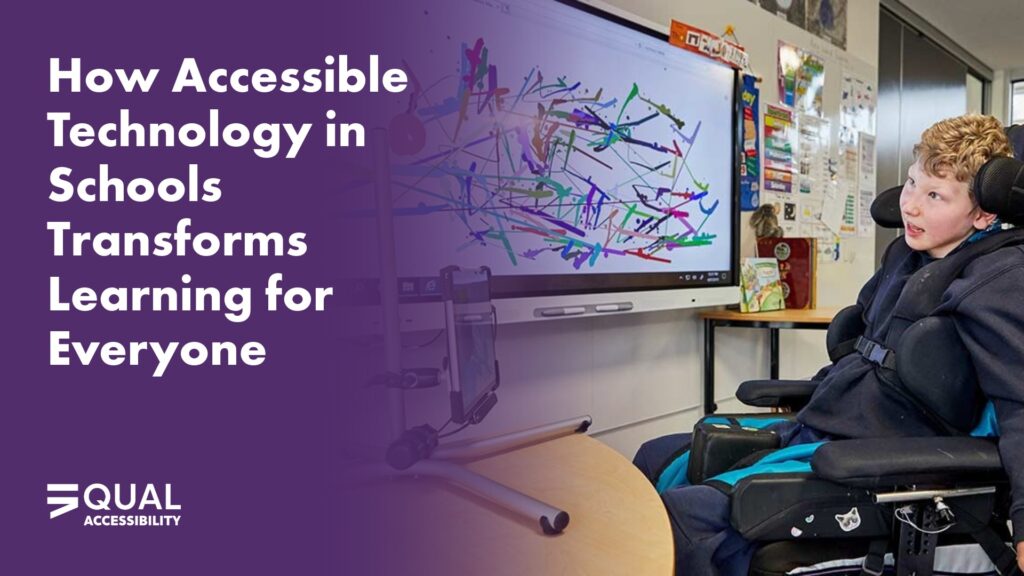
Why Accessible Technology in Schools Matters to Me
Growing up, I faced numerous obstacles in a world not designed for people in wheelchairs, limb differences, and disabilities in general. School was no exception. From struggling with doors and desks to figuring out how to participate in class projects, I quickly learned that “equal access” wasn’t the same as “real inclusion.”
Now, as both a parent and a professional in accessibility, I see the same barriers still showing up in classrooms today. The difference is that we now have powerful tools that didn’t exist when I was younger. Accessible technology in schools isn’t just about checking an ADA compliance box. It’s about giving every child the chance to learn, grow, and thrive on a level playing field.
What Accessible Technology in Schools Looks Like
Accessible technology in schools can take many forms. For some students, it’s a screen reader or a speech-to-text program. For others, it might be captioning, alternative input devices, or specialized communication tools. Even something as simple as allowing students to use their own tablets or laptops, rather than being forced to use standard-issue computers, can make a huge difference.
The beauty of accessible technology in schools is that it often helps everyone, not just students with disabilities. Voice typing can assist a child with dyslexia, but it also speeds up writing for kids who just think faster than they type. Captioning is essential for deaf students, but it also helps English language learners and students who process information better when reading along.
My Experience as a Parent
One of the hardest lessons I learned as a parent was that my children sometimes felt left out when schools weren’t equipped to include me in the same way as other parents. Accessibility gaps don’t just affect the student with a disability; they ripple through families.
That’s why I feel so strongly about promoting accessible technology in schools. When we create inclusive classrooms, it sends a message to all students that differences are normal, and everyone deserves equal opportunities. It prepares kids not only to succeed academically, but to enter the world with empathy, awareness, and respect for others.
Barriers Still Holding Schools Back
Despite progress, there are still challenges. Some schools hesitate to invest in accessible technology because they see it as “too expensive” or “only benefiting a small group.” Others adopt technology but fail to train teachers on how to use it effectively. And sometimes, the problem is a lack of awareness — administrators simply don’t realize what’s available.
I’ve seen this firsthand when consulting with organizations. Accessibility isn’t just about the tools themselves; it’s about the mindset of the people using them. Until we shift from “minimum compliance” to “maximum inclusion,” accessible technology in schools won’t reach its full potential.
The Ripple Effect of Accessible Technology in Schools
Here’s the truth: accessible technology in schools benefits everyone. When a student with a disability can fully participate, the entire class learns more. Collaboration improves. Teachers become more creative. And students without disabilities grow up in environments where accessibility and inclusion are just part of everyday life.
Think about the long-term effect. A child who grows up watching their classmate use assistive technology without stigma will one day enter the workforce expecting accessibility to be the norm. That’s how culture shifts happen.
Steps Schools Can Take Right Now
Promoting accessible technology in schools doesn’t have to be overwhelming. Here are a few practical steps administrators and teachers can take:
- Audit current tools – Look at what technology your school already uses and see if it has built-in accessibility features. Many platforms do, but they’re often overlooked.
- Involve students and families – Ask students what works for them. Accessibility isn’t one-size-fits-all.
- Train staff – Technology is only powerful if teachers know how to use it. Provide ongoing professional development on accessibility tools.
- Budget with inclusion in mind – Accessibility should be part of every technology purchase decision, not an afterthought.
- Celebrate accessibility wins – When accessible technology helps a student succeed, share that story with the school community.
Looking Ahead
I often think about what my education could have been like if accessible technology had been available to me in the same way it is today. My story might have looked very different. But what excites me now is knowing that today’s students don’t have to face the same barriers. We have the tools. We just need the commitment.
Promoting the use of accessible technology in schools isn’t just about helping students with disabilities succeed. It’s about creating a school system that recognizes the value of every student and prepares them for the future. And that’s something worth fighting for.
Final Thoughts
If you’re a school administrator, a teacher, or even a parent, I encourage you to advocate for accessible technology in schools. It’s not optional — it’s essential. Inclusion starts in the classroom, and technology is one of the most powerful ways we can make sure every student feels seen, valued, and capable of success.
Want help evaluating your school’s accessibility approach? Reach out to Equal Accessibility here. We’d love to help you build an inclusive environment that works for everyone.