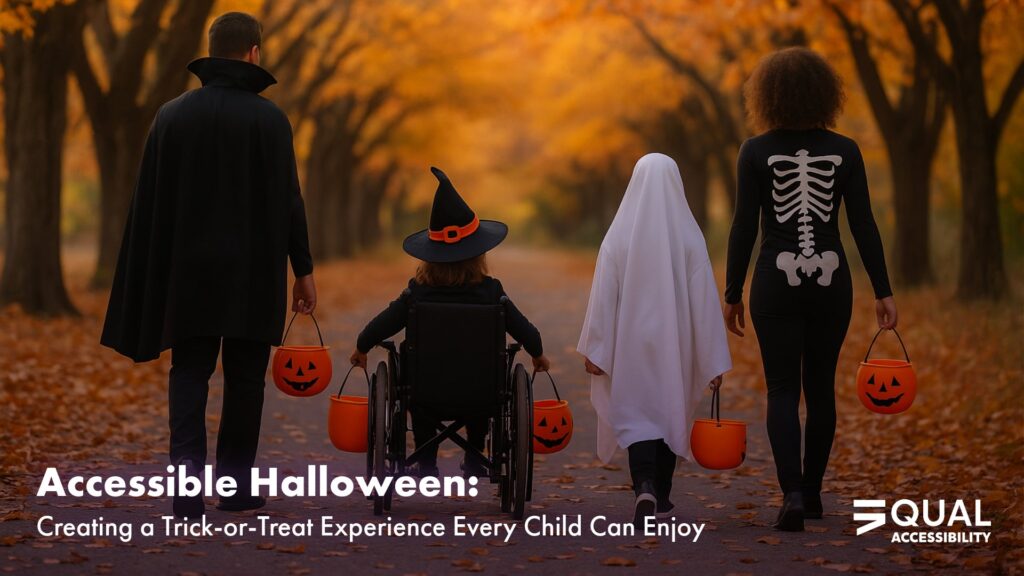
When I was a kid, an accessible Halloween wasn’t really a thing. Most streets didn’t have curb ramps, so I’d have to go down people’s driveways, roll into the street, and then find another driveway to get back up. It made trick-or-treating feel like an obstacle course — one that wasn’t designed for me.
Even when I made it to a house, not all porches were within reach. Some had stairs leading up to the door, so I’d have to wait at the bottom and hope someone noticed me. Sometimes they did. Sometimes they didn’t. Those moments didn’t ruin Halloween for me, but they stuck with me. They reminded me how something as simple as candy and costumes could feel out of reach without an accessible Halloween.
Accessibility Shouldn’t End at the Sidewalk
It’s easy to think of accessibility as something reserved for schools, workplaces, or public buildings, but inclusion starts right in our neighborhoods. An accessible Halloween is about making sure every child — no matter their ability — can enjoy the same spooky fun as their friends.
Curb ramps, smooth sidewalks, and step-free entrances aren’t just about compliance — they’re about community. They make it possible for everyone, regardless of mobility, to take part in the fun. Something as small as adding a portable ramp, setting up a treat station at the bottom of your steps, or putting a sign near your driveway saying “Accessible Treats Here!” can make a big difference.
In recent years, I’ve loved seeing more neighborhoods embrace the idea of an accessible Halloween. Some even use resources like Treat Accessibly, a Canadian organization that offers great tips and ideas for making trick-or-treating inclusive. They even provide free accessible trick-or-treating signs in Canada so families know which homes are barrier-free. It’s a small idea with a big impact — helping turn Halloween into a night every child can look forward to.
What Businesses Can Learn from an Accessible Halloween
At Equal Accessibility, we work with companies that want to make their spaces welcoming to everyone. And while Halloween might seem like just a kids’ event, the lessons from an accessible Halloween apply directly to businesses too.
Businesses can take a few cues from accessibility-focused communities:
- Think beyond compliance. Meeting ADA requirements is the bare minimum. Go further by creating experiences that make everyone feel included — from an accessible entrance to sensory-friendly environments.
- Be proactive. Just like families who set up accessible candy stations, businesses should anticipate needs instead of waiting for someone to ask.
- Make inclusion visible. When you make accessibility part of your identity, it shows. A ramp, a wide doorway, a captioned video — these all say “you belong here.”
Imagine a downtown trick-or-treat event where every business on the block participates in an accessible Halloween — offering step-free access, clear pathways, and wide aisles. That’s not just good for inclusion — it’s good for business. Families remember the places that make them feel seen and respected.
A Personal Reminder
Now, as someone who helps organizations and companies design inclusive spaces, Halloween reminds me where this all started. Back then, I wasn’t thinking about design principles or ADA codes — I just wanted to be part of the fun. That’s the spirit of an accessible Halloween: no barriers, no extra steps, just equal opportunity for joy.
That’s what accessibility is really about. It’s not about checking boxes or filling out forms; it’s about connection. It’s about a kid in a wheelchair being able to roll up to a door, knock, and hear, “Wow, great costume!” without worrying about stairs or curbs.
And for adults, it’s about knowing that every customer, guest, or employee feels that same sense of belonging — not because they had to ask for it, but because it was built in from the start.
Small Steps That Make a Big Impact
Whether you’re a homeowner getting ready for Halloween or a business preparing for an event, here are a few ways to support an accessible Halloween:
- Keep paths clear. Move decorations and cords away from ramps and walkways.
- Use good lighting. Bright, even lighting helps kids with low vision and makes navigation safer for everyone.
- Set up ground-level treat tables. If you have stairs, place candy near the sidewalk or driveway.
- Offer sensory-friendly options. Not all kids enjoy flashing lights or loud sounds — create a calm area for them.
- Spread the word. Let people know your home or business supports an accessible Halloween.
These aren’t big renovations — they’re small, thoughtful gestures that make sure no one feels left out on one of the most exciting nights of the year.
Building a More Accessible Future
Halloween may only last one night, but the lessons we can learn from an accessible Halloween last much longer. Every ramp, every clear pathway, every welcoming doorway is part of something bigger — a world where everyone belongs.
When we talk about accessibility in business, we’re talking about more than policies or compliance; we’re talking about empathy. Halloween is the perfect reminder of that. It’s about creating joy, connection, and belonging for everyone — whether they’re trick-or-treating, shopping, dining, or working.
Make Your Business a Place Where Everyone Feels Welcome
Accessibility isn’t a seasonal effort — it’s something you can build into your space and culture year-round. Let’s talk about how Equal Accessibility can help your business create inclusive experiences that make everyone feel welcome. Contact us today to start your accessibility journey.