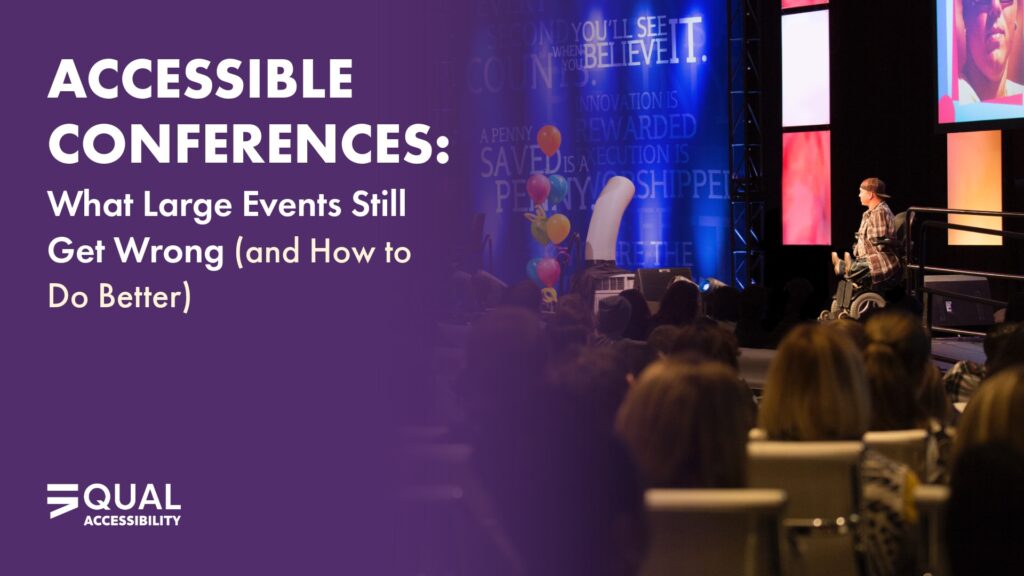
Conferences are meant to inspire, connect, and create opportunities. They bring together people from all walks of life to share ideas and build relationships. But too often, accessibility is treated like an afterthought. Over the years, I’ve attended countless events, and I’ve seen what works—and what fails—when it comes to accessible conferences.
Back in 2023, I wrote about accessibility at conferences and some of the barriers I’ve faced. A year later, I’ve noticed many of the same problems keep showing up. From ADA lines that separate attendees from their guests, to wheelchair seating shoved in the back, to mixers without ASL interpreters—it often feels like accessibility is the last thing considered.
The good news? These challenges can be fixed. With just a little more thought and planning, large events can shift from being frustrating to being truly inclusive. Let’s talk about what goes wrong—and how event planners can do better.
The ADA Line That Separates Instead of Includes
At one event, I was directed to the ADA line. It seemed helpful—until I was told my assistant and family had to go in the regular line. That left me waiting alone, separated from the very people I rely on.
This is exactly the kind of issue that makes or breaks accessible conferences. An accommodation that splits people up isn’t inclusion—it’s isolation. A better solution is simple: allow guests and assistants to use the ADA entrance together.
Wheelchair Seating That Pushes People to the Back
Too often, accessible seating is shoved in the back row of conference halls. From there, people’s heads block the view, and the energy of the room feels distant.
Accessible conferences should provide seating options throughout the venue—not just in the margins. Giving people choices about where they sit sends a powerful message: you belong here, just like everyone else.
Restrooms That Ignore Real Needs
Restrooms are another overlooked barrier. Many large venues don’t have family or assistive restrooms, which makes it stressful or even impossible to attend without help. I’ve had to plan bathroom breaks around availability—or worse, limit what I drink just to avoid the issue.
If we want accessible conferences, restroom access has to be part of the plan. That could mean using existing family restrooms or designating private single-stalls for accessibility use.
Networking Mixers That Exclude by Design
Networking mixers are supposed to build connections, but at many events every single table is a tall cocktail table. As a wheelchair user, that forces me into an awkward position, looking up at everyone else.
And it’s not just about mobility. I’ve been to breakout sessions with no ASL interpreters, leaving deaf attendees without equal access. For blind attendees, slides often go un-described. Neurodivergent attendees are given no quiet spaces to step away from overstimulation.
Accessible conferences take these realities into account. That means mixing table heights, providing interpreters, describing visuals, and creating quiet zones for those who need them.
Accessibility Isn’t a Checklist
The biggest mistake I see is when event planners treat accessibility like a box to check. But accessible conferences aren’t about legal minimums—they’re about real experiences. The right questions to ask are:
- Can attendees with disabilities engage with the same dignity and ease as everyone else?
- Are families, assistants, and peers able to stay together?
- Does the design of the event show that accessibility was considered from the start—not as an afterthought?
When organizers focus only on compliance, they miss the bigger picture: inclusion is about connection. And connection is the whole point of a conference.
How to Do Better
The good news is, solutions don’t always require big budgets. Some of the easiest fixes are also the most impactful. Here are a few ways to make accessible conferences a reality:
- Allow guests and assistants to use ADA entrances together.
- Reserve accessible seating in multiple areas, not just the back.
- Provide family and assistive restrooms, or designate private ones.
- Ensure ASL interpreters and captioning are available for all sessions.
- Add low tables at mixers and dining areas.
- Create quiet rooms for neurodivergent attendees.
- Share accessibility information clearly on your event website.
The Path to Truly Accessible Conferences
I love attending conferences. I love the energy, the conversations, and the learning. But I also know how exhausting it is to navigate barriers that could have been prevented with just a little more planning.
When planners commit to accessible conferences, they unlock the full potential of their events. That means richer discussions, stronger connections, and more diverse perspectives in the room.
When I first wrote about accessibility in 2023, I hoped more organizers would start listening to lived experiences. Some have—but many haven’t. The work is far from finished. The good news is that change doesn’t have to be complicated. With a few intentional decisions, event planners can transform conferences from frustrating to welcoming.
Because real inclusion isn’t about letting us in the room—it’s about ensuring we can participate fully once we’re there.
Need Help with Accessibility at Your Upcoming Conference or Event?
If you’re planning an event and want guidance on how to make it more inclusive, reach out to us at Equal Accessibility. Together, we can make sure your event isn’t just technically compliant, but truly an accessible success story.